
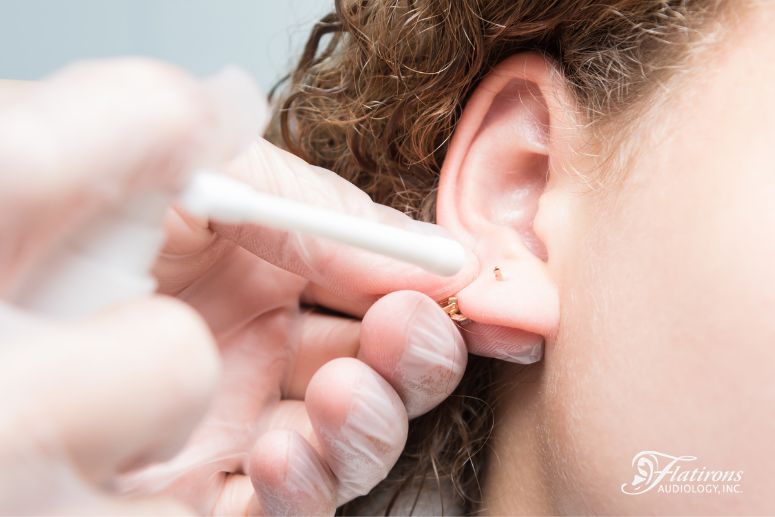
- Ear cleaning should protect the ear canal, not scrape, burn, flood, or push wax deeper into the ear.
- Knowing which methods are unsafe can help prevent impacted wax, irritation, infection, eardrum injury, and delayed care for hearing symptoms.
- Flatirons Audiology, Inc. provides ear wax removal and ear care in Lafayette, CO for people with blocked, painful, or wax-filled ears.
Why Ear Cleaning Can Become Unsafe
Earwax is not dirt. It helps protect the ear canal by trapping debris, moisturizing the skin, and moving outward naturally. Most ears do not need deep cleaning.
Problems often begin when a person tries to remove wax from deep in the canal. The ear canal is narrow, sensitive, and close to the eardrum. Scraping, digging, flushing with too much pressure, or using unproven methods can make a simple wax concern worse.
Unsafe ear cleaning methods can:
- Push wax deeper into the canal
- Scratch or inflame the skin
- Cause bleeding or pain
- Increase the risk of infection
- Damage the eardrum
- Leave pieces of cotton or tools behind
- Delay care for sudden hearing loss or an ear infection
Cotton Swabs Inside the Ear Canal
Cotton swabs are one of the most common unsafe ear cleaning methods when they are pushed into the ear canal. They may seem gentle, but they can pack wax deeper instead of removing it.
Why Cotton Swabs Are Risky
Using cotton swabs inside the canal can:
- Compact wax against the eardrum
- Irritate delicate canal skin
- Cause small cuts that may become infected
- Leave cotton behind
- Trigger pain, crackling, or a blocked feeling
- Injure the eardrum if inserted too far
Safer Alternative
Use a damp cloth to clean the outer ear only. If wax is deep enough that you need a swab to reach it, it is too deep for at-home digging.
Ear Candling
Ear candling involves placing a hollow candle or cone near the ear and lighting it. It is marketed as a way to pull out wax, but it is not a safe or reliable method for earwax removal.
Why Ear Candling Is Unsafe
Ear candling can cause:
- Burns to the ear, face, or hair
- Candle wax dripping into the ear canal
- Eardrum injury
- Blocked canals from candle debris
- Delayed treatment for the real cause of symptoms
It can also create the appearance of removed wax even when the residue is from the candle itself. If your ear feels blocked, professional visualization is safer than using flame near the ear.
Ear Picks, Scoops, Hairpins, and Small Tools
Ear picks, metal scoops, hairpins, paper clips, and similar tools are risky because they can scrape the ear canal or reach the eardrum. Even tools sold for ear cleaning can cause harm if used without a clear view of the canal.
Avoid putting these into the ear:
- Hairpins
- Paper clips
- Toothpicks
- Ear scoops
- Metal picks
- Bobby pins
- Pen caps
- Fingernails
The ear canal skin is thin and easy to injure. A small scratch can become painful, swollen, or infected.
Ear Cameras and At-Home Scooping Kits
Ear cameras can make people feel more confident, but seeing wax on a phone screen does not make deep removal safe. Depth perception can be difficult, and it is easy to push wax farther in while trying to scoop it out.
Ear cameras may be risky if:
- You are trying to remove wax close to the eardrum
- The canal is narrow, tender, or swollen
- The image is unclear
- Someone else is guiding the tool without training
- You have pain, drainage, or a history of ear surgery
If you see wax that looks deep or packed, stop and schedule an ear check.
Flatirons Audiology provides professional ear wax removal in Lafayette, CO.
High-Pressure Water Devices
Some people try to flush their ears with shower jets, oral irrigators, squeeze bottles, or other high-pressure water devices. This can be unsafe, especially if the eardrum is not intact or the water pressure is too strong.
High-pressure flushing may cause:
- Ear pain
- Dizziness
- Canal irritation
- Infection risk from trapped moisture
- Eardrum injury
- Wax pushed deeper if it does not fully clear
Professional irrigation, when appropriate, uses a controlled technique and starts with an ear exam. At-home pressure devices are not the same thing.
Hydrogen Peroxide, Oil, and Ear Drops Used Incorrectly
Some over-the-counter drops can soften wax, but drops are not safe for every ear and should not be overused. More is not always better.
Avoid using drops without guidance if you have:
- Ear pain
- Drainage
- Ear tubes
- A known or suspected eardrum perforation
- Recent ear surgery
- Dizziness
- A foreign object in the ear
- Sudden hearing loss
Drops can also make the ear feel more plugged if wax swells or shifts but does not come out. If that happens, stop adding products and get the ear checked.
Ear Vacuums and Suction Gadgets
At-home ear vacuums are marketed as gentle suction tools, but many do not remove deep wax effectively. Strong or poorly controlled suction can irritate the canal, and weak suction may give a false sense that the ear has been cleaned.
Professional suction is different because the provider can see the ear canal, control the tool, and stop if the ear looks irritated or unsafe for removal.
When Ear Cleaning Should Wait
Do not try to clean the ear at home when symptoms suggest something more than routine wax.
Seek care instead if you have:
- Sudden hearing loss
- Severe ear pain
- Drainage, blood, or a bad smell from the ear
- Dizziness or spinning vertigo
- Fever with ear symptoms
- A known eardrum perforation
- Ear tubes or recent ear surgery
- A foreign object in the ear
- One-sided ringing or hearing changes that are new or worsening
These symptoms need an exam. Trying to clean the ear first can delay the right care.
Safer Ways to Care for Your Ears
Most ear care should be simple and gentle.
Safer options include:
- Wipe the outer ear with a soft, damp cloth
- Let normal wax move out naturally
- Keep hearing aids, earbuds, and earplugs clean
- Avoid putting tools into the ear canal
- Use wax-softening drops only when they are appropriate for your ear
- Schedule professional care when wax affects hearing, comfort, or hearing aid use
The safest rule is simple: do not put anything smaller than your elbow into the ear canal.
When Professional Ear Wax Removal Is the Better Choice
Professional care is a better option when wax is deep, impacted, painful, recurring, or affecting hearing.
Schedule an ear check if you notice:
- Muffled hearing
- A full or clogged ear
- Ringing that starts with a blocked feeling
- Earwax problems with hearing aids
- Wax that keeps coming back
- Drops that made the ear feel worse
- Uncertainty about whether wax is the real problem
A professional can look in the ear, confirm whether wax is present, check for irritation or infection, and choose the safest removal method.
Common Questions About Unsafe Ear Cleaning Methods
Are cotton swabs safe if I am careful?
Cotton swabs are safest on the outer ear only. Even careful use inside the canal can push wax deeper or irritate the skin.
Are ear candles ever recommended?
No. Ear candles are not a recommended earwax removal method. They can cause burns, debris, and injury without reliably removing wax.
Is it safe to flush my ears at home?
Home flushing can be risky if the eardrum is not intact, if pressure is too high, or if symptoms are not caused by wax. If you have pain, dizziness, drainage, or sudden hearing changes, do not flush the ear.
Can earwax drops be unsafe?
Yes. Drops can be unsafe with ear tubes, eardrum perforation, drainage, pain, recent surgery, or uncertain symptoms. They can also make wax feel more blocked if wax softens but does not clear.
What should I do if I push wax deeper?
Stop using tools or drops unless a clinician has told you to continue. Schedule an ear check so the wax can be viewed and removed safely if needed.
Safer Ear Cleaning Help in Lafayette, CO
If you are worried about unsafe ear cleaning methods or think wax is blocking your hearing, Flatirons Audiology, Inc. can examine your ears and recommend a safer next step.
Professional ear wax removal can help protect the ear canal while addressing wax that is causing fullness, discomfort, hearing changes, or hearing aid problems.
Contact us today to schedule an appointment!
